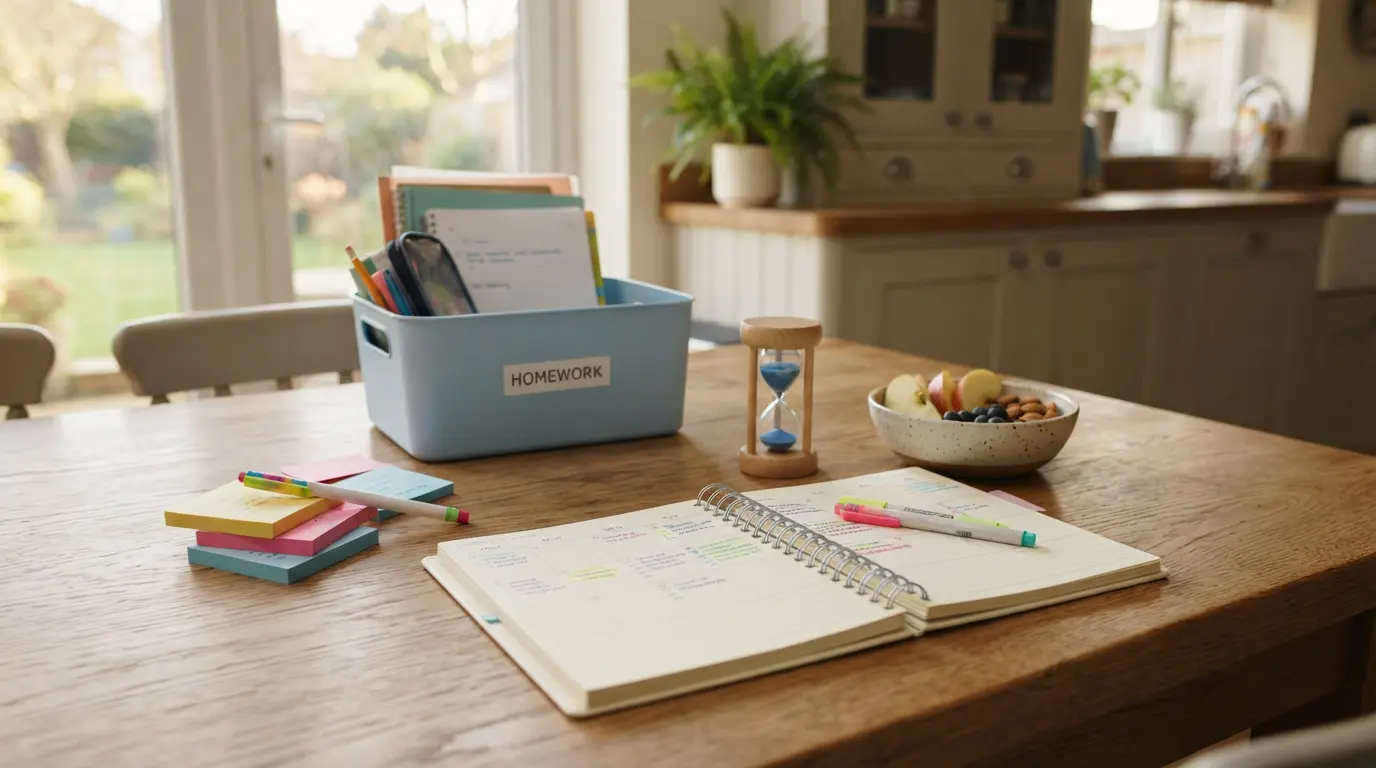
12 Homework Tips for ADHD Kids That Actually Survive the After-School Crash
Your child just walked through the door after six hours of holding it together at school. Their brain is spent, their body is restless, and you are about to say the two words that can unravel the entire evening: "Time for homework." If that scene sounds familiar, you are not alone. The after-school crash is real, and for kids with ADHD, it hits especially hard. This article gives you 12 concrete, parent-tested strategies — covering environment, timing, behavior, and tools — that can make homework time less of a battle and more of a routine your family can actually stick with.
Want a free head start?
Before you dig into the tips, grab our free download — 7 ADHD Daily Routine Sheets — designed to help kids like yours move through the day with less friction and more confidence. Snag your free copy at klivanta.com and have it ready to try today.
1–3: Start With the Crash, Not the Homework
The after-school crash is not laziness or defiance. After hours of sitting still, following directions, and managing emotions, an ADHD brain is genuinely depleted. Fighting that instead of working with it is where most homework battles begin.
Tip 1: Build in a real decompression window. Many families find that 20 to 30 minutes of unstructured downtime right after school — snack, outdoor play, or quiet screen time — makes the transition into homework far smoother.
Tip 2: Offer a protein-rich snack before anything else. A stable blood sugar level can support steadier focus. Think cheese, peanut butter, or a handful of nuts — not chips or a cookie that leads to an energy spike and crash.
Tip 3: Use a transition ritual. A short, predictable signal — like changing clothes, a quick walk to the mailbox, or even a two-minute dance break — can help the brain shift from "school mode" to "home mode." Consistency is what makes it work.
4–6: Set Up a Homework Workspace That Works
Where your child does homework matters as much as when. An environment with too much stimulation can make it nearly impossible for an ADHD brain to settle.
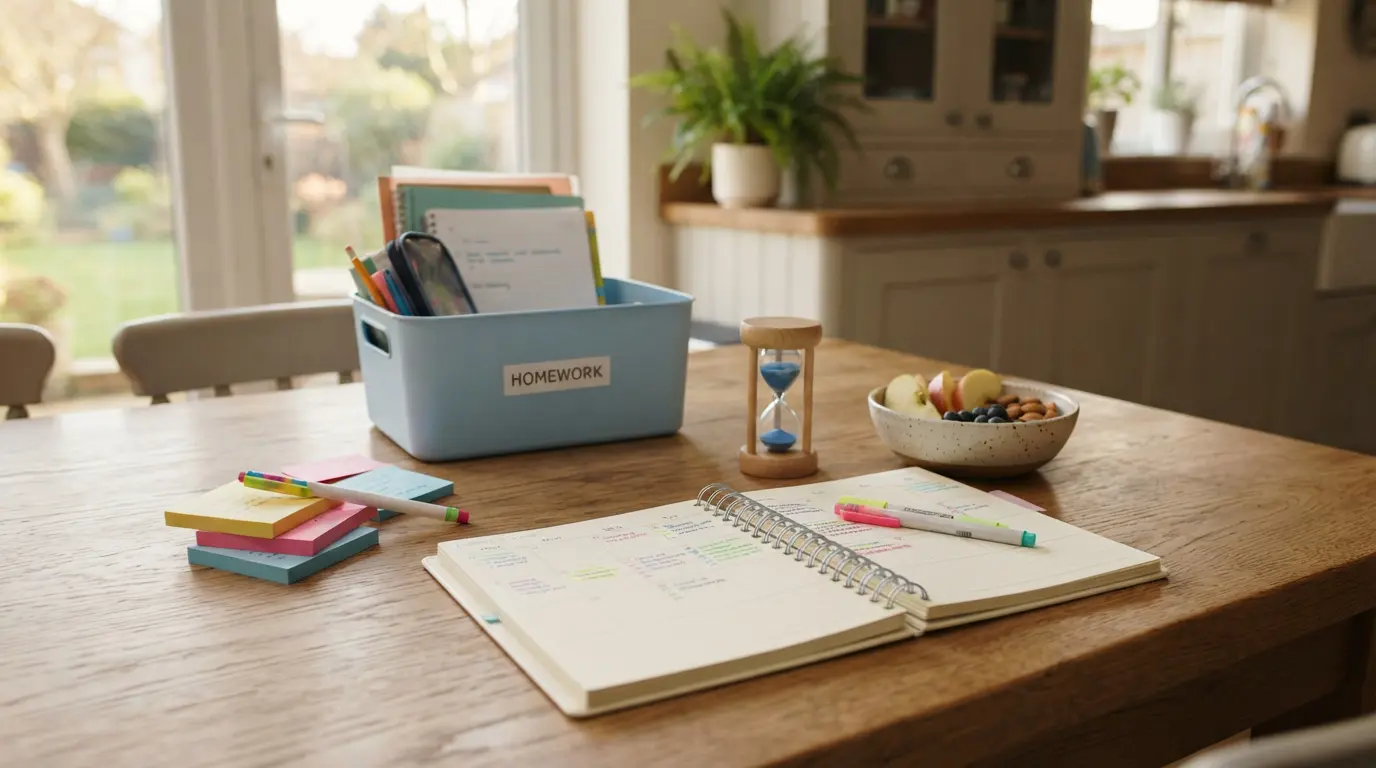
Tip 4: Choose one consistent homework spot. The kitchen table, a bedroom desk, or even a floor cushion in a quiet corner — consistency reduces the mental negotiation of figuring out where to start.
Tip 5: Clear the visual clutter. Toys, screens, and piles of stuff compete for your child's attention. Before homework begins, do a quick two-minute surface clear. Less visual noise means fewer mental detours.
Tip 6: Use noise strategically. Some ADHD kids focus better with white noise or soft instrumental music in the background. Others need complete quiet. Pay attention to what your child gravitates toward, and use that as your baseline rather than assuming silence is always better. Klivanta.com has additional workspace setup tips worth bookmarking.
7–9: Use Timers and Structure to Make Homework Feel Manageable
Open-ended homework time feels overwhelming to an ADHD child. Time blindness — the inability to sense how much time is passing — is a common challenge, and it turns homework into a vague, endless task.
Tip 7: Use the Pomodoro method. Short work blocks followed by a short break can make a huge difference. A Pomodoro Tracker printable gives kids a visual way to see how many work sessions they have left — and that finish line matters enormously for motivation.
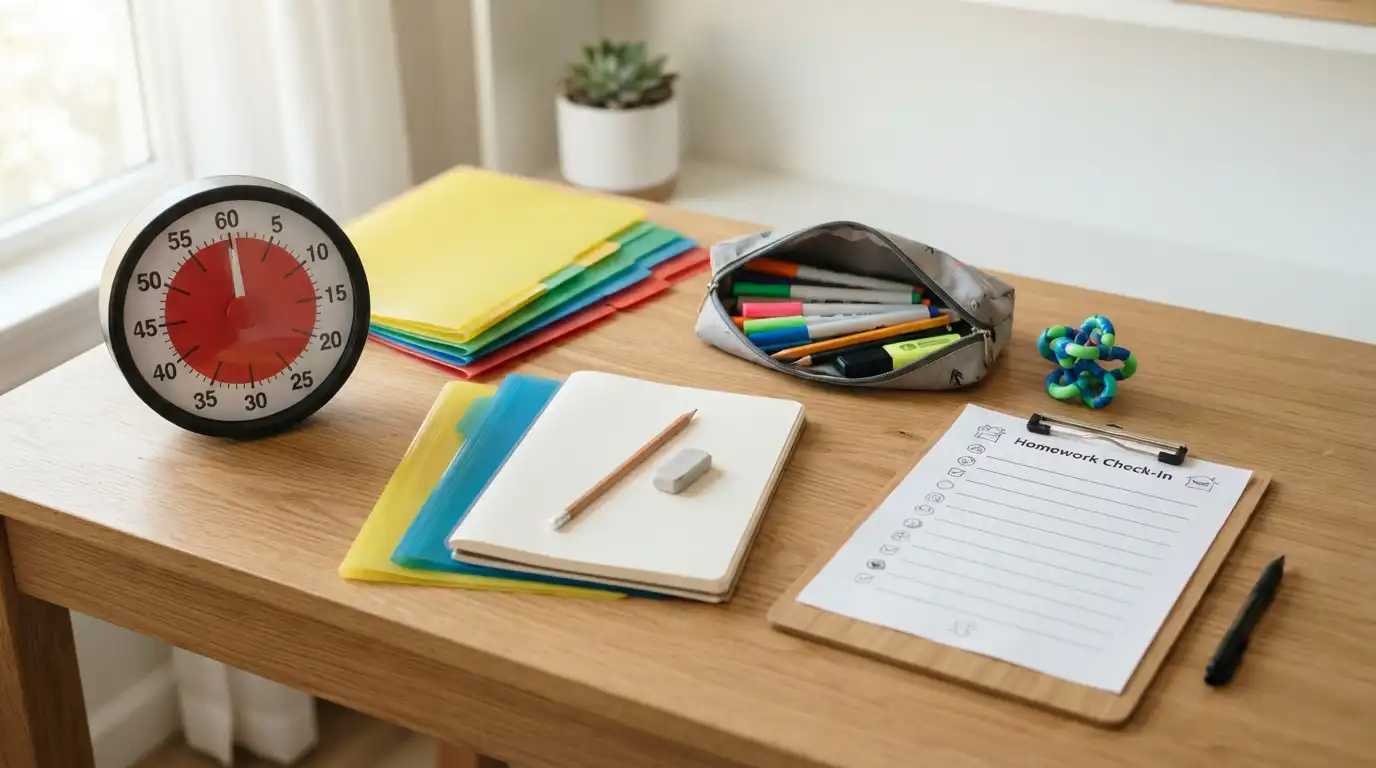
Tip 8: Set a timer, not a deadline. Instead of "finish before dinner," try "work for 15 minutes, then check in." A visible countdown timer (not just a phone alarm) gives the brain something to anchor to.
Tip 9: Break assignments into pieces. "Do your homework" is a vague instruction. "Write your name and read the first question" is something a child can actually start. Smaller chunks reduce the overwhelm that leads to shutdown.
10–12: Use Tools and Routines That Build Independence Over Time
The goal is not just to survive tonight's homework — it is to help your child build the executive function habits that will serve them for years. Simple tools, used consistently, can support that process.
Tip 10: Use a Homework Planner printable. When kids write down each assignment, check the materials they need, and cross tasks off as they finish, they are practicing planning and task management in a concrete, hands-on way. Many families find it becomes a homework anchor their child actually wants to use.
Tip 11: Use a Focus Session Planner to set intentions. Before starting, your child writes down one assignment, how long they will work, and what they need. This one-minute planning habit can dramatically reduce mid-homework wandering because the brain knows exactly where it is headed.
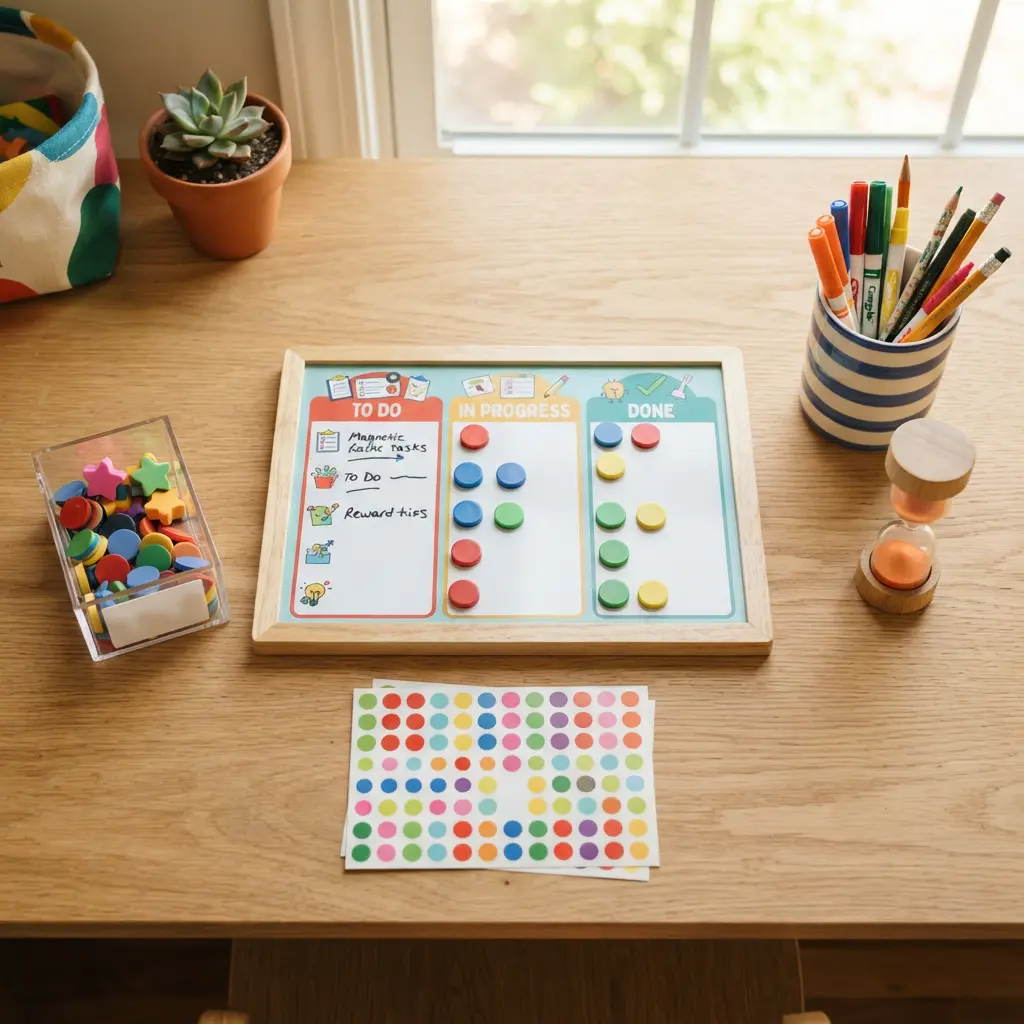
Tip 12: Celebrate completion, not perfection. An enthusiastic "You did it — all done!" at the end of homework goes a long way. ADHD kids often hear what they did wrong. Naming what they did right, consistently, builds the motivation to do it again tomorrow.
One mom shared that after adding a Homework Planner and a 20-minute decompression window, her seven-year-old started coming to the table on his own most nights. "It wasn't magic," she said. "It just finally felt doable for him."
Quick Action Steps for Today
- Announce a 25-minute decompression break the moment your child walks in — no homework talk until it is over.
- Clear your child's homework spot of everything except what is needed for tonight's assignments.
- Download the free 7 ADHD Daily Routine Sheets at klivanta.com and pick just one to try this week.
- Set a visual timer for 15 minutes and tell your child: "We work until the timer goes off, then you get a break."
- At the end of homework, point out one specific thing your child did well — out loud, with real enthusiasm.
Frequently Asked Questions
How long should homework take for an ADHD child? There is no universal rule, but many families find that shorter, timed sessions with breaks in between are more effective than pushing through in one long stretch. A good starting point is 15 to 20 minutes of focused work followed by a 5-minute break, repeated as needed until homework is finished.
What if my ADHD child refuses to do homework at all? Refusal is often a sign that homework feels overwhelming, not that your child is being difficult. Starting smaller — even one question, one sentence, or one problem — and celebrating that small win can break the cycle. Consistent structure, a predictable workspace, and visual tools like a Homework Planner may also reduce the resistance over time.
What is the best time of day for an ADHD child to do homework? It depends on the child. Some ADHD kids do better tackling homework shortly after their decompression window — roughly 30 to 45 minutes after getting home. Others genuinely need a longer break and perform better after dinner. Experiment for a week or two, keep the time consistent, and let your child's focus quality — not the clock — guide you.
Ready to try this with your family?
Start with something simple and free — download the 7 ADHD Daily Routine Sheets at klivanta.com and use them to build a smoother after-school rhythm this week. If you are ready for a full system, The ADHD Parent Toolkit at klivanta.com brings together planners, trackers, and routine tools designed to support your child from morning to bedtime.


Leave a Comment