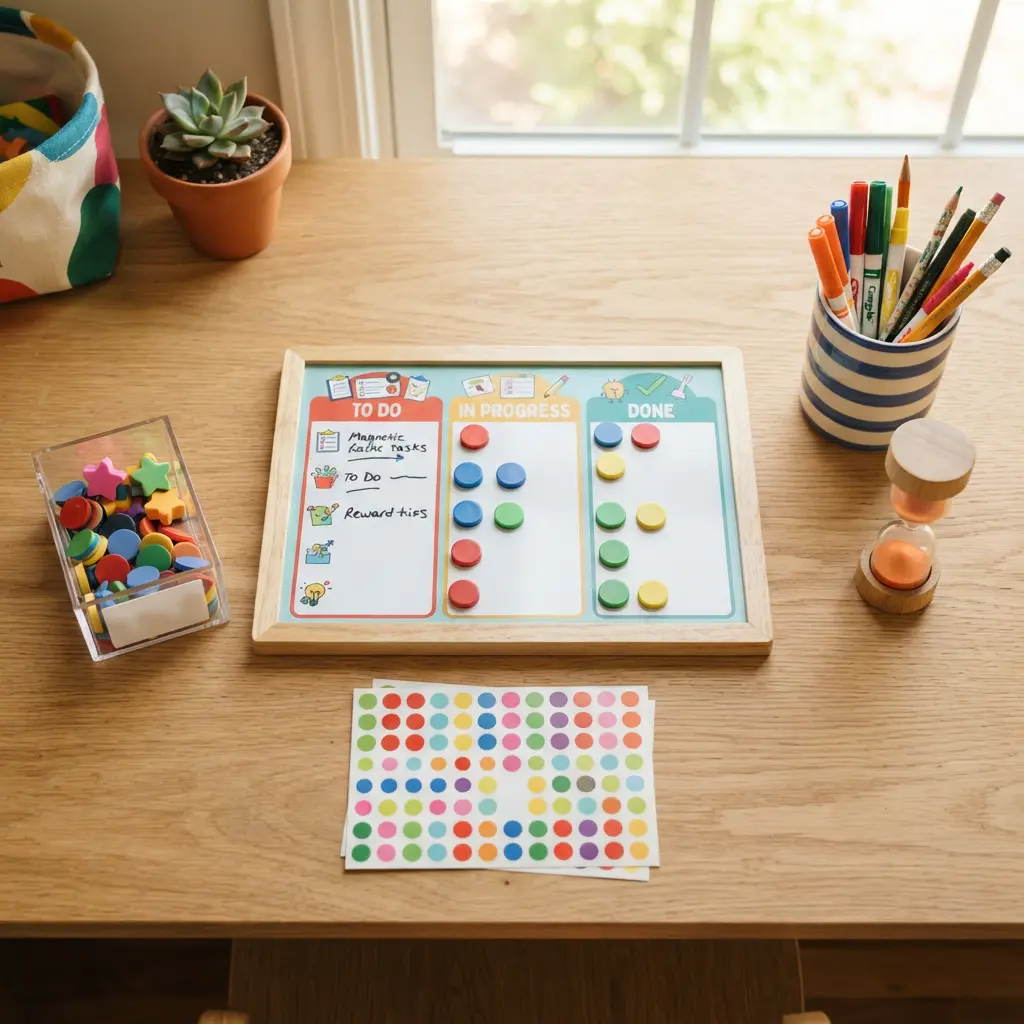
10 ADHD Chore Chart Rewards Systems That Motivate Kids (Free Printable)
You've tried the chore chart. You bought the stickers. You explained the rules three times. And still, nothing moves. If your child has ADHD, you already know that a plain checklist on the fridge isn't enough. The issue isn't willpower — it's brain wiring. Kids with ADHD often struggle to feel motivated by rewards that feel far away or abstract. The good news? There are reward systems designed specifically for the way their brains work. This article walks you through 10 practical ADHD chore chart reward systems you can start using this week, no overhaul required.
Want a free head start?
Before you dive in, grab our free download — 7 Printable ADHD Daily Routine Sheets — to pair with any of the reward systems below. They're ready to print and use today, and families tell us they make a real difference right away. Get your free sheets here.
Why Standard Reward Charts Often Fall Flat for ADHD Kids
Most traditional chore charts are built around delayed rewards — earn enough stickers by Friday, get a prize. For a child with ADHD, Friday might as well be next year. Research on executive function tells us that ADHD brains have a harder time connecting present effort to future payoff. That gap in time makes motivation collapse fast. What tends to work better is immediate, visible, and specific feedback. When a child can see progress happening right now — tokens in a jar, a bar filling up, a sticker going on the chart in real time — their brain gets the dopamine hit it needs to keep going. The reward systems below are built around that idea. None of them require perfection. They just require a small shift in how you structure the payoff.
1–3: Token-Based Systems That Create Instant Wins
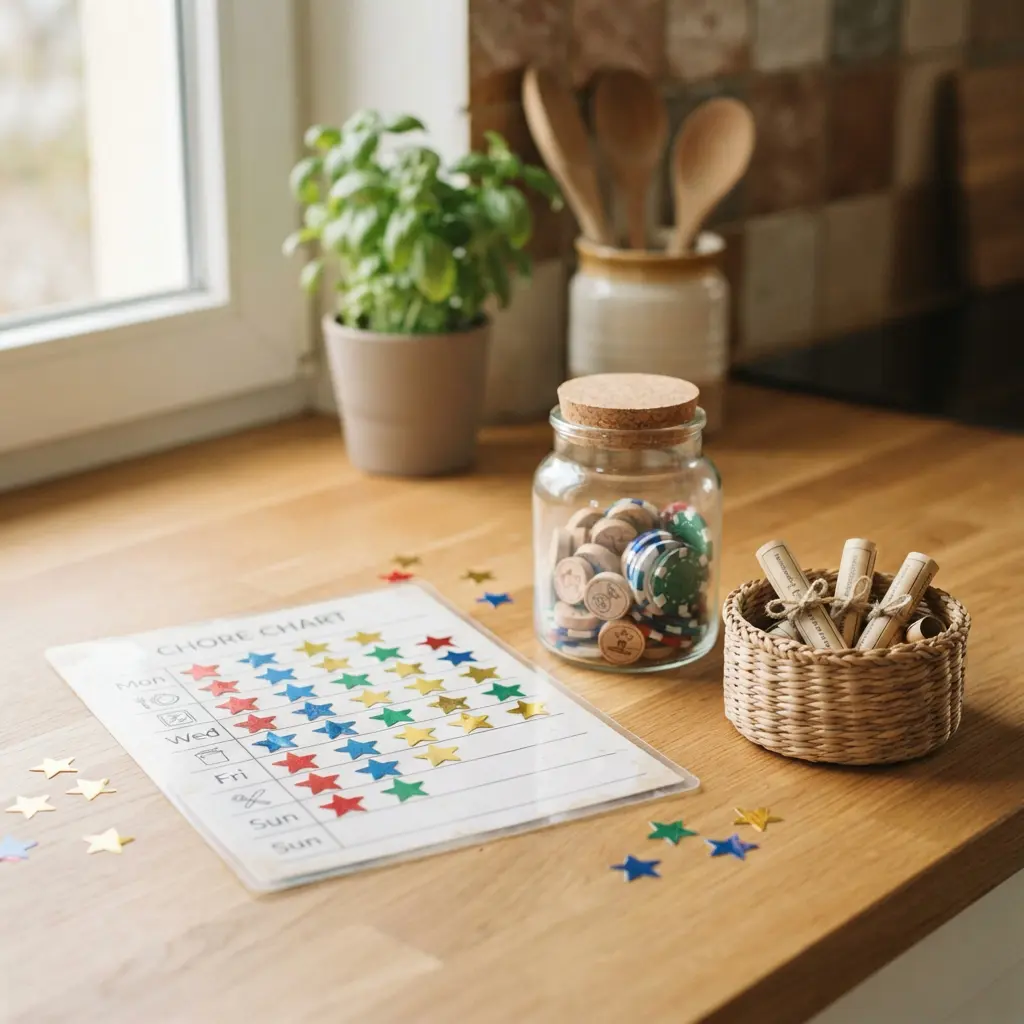
Token economies are one of the most well-studied tools in ADHD parenting. The idea is simple: your child earns a physical token (a coin, a poker chip, a star cutout) the moment a chore is done. Tokens add up and trade in for something they want.
Here are three ways families set this up:
The Coin Jar works well for kids ages 5–7. Drop one coin in a clear jar for each completed task. When the jar hits a set line, they pick a reward. Seeing the jar fill up is half the motivation.
The Chip Board suits kids who like a game feel. Use colored chips on a pegboard — each color means a different chore. Completing all of one color unlocks a bonus.
The Star Punch Card is great for kids who love collecting things. Each completed chore earns a star punched on a small card. Ten stars equals a chosen reward. The physical act of punching the card feels satisfying on its own.
A printable like the Daily Chore Chart from Klivanta slots naturally into any of these systems as the visual backbone.
4–6: Visual Progress Systems That Tap Into Completion Drive
Some kids with ADHD are strongly motivated by seeing something go from empty to full. These systems use that instinct to build chore momentum. If you're hitting a wall with resistance, 10 ADHD Chore Resistance Hacks Every Parent of a 5–10 Year Old Needs to Try is worth reading alongside this one.
The Fill-the-Bar Chart uses a hand-drawn or printed thermometer graphic. Each chore moves the fill line up. When it hits the top, they earn their reward.
The Puzzle Piece Chart turns a simple image into a puzzle. Print a picture your child loves and cut it into 10–15 pieces. Each completed chore reveals a new piece. Finishing the puzzle earns something special.
The Countdown Clock Chart works backwards. Start at 10 and cross off one number per chore. Kids who like counting down (think rocket launch) often respond well to this framing over counting up.
7–9: Choice-Based and Autonomy Systems
Kids with ADHD often respond strongly when they feel like they have a say. These systems hand some control back to your child, which can reduce power struggles and boost follow-through.
The Reward Menu lets your child pick from a list of pre-approved rewards rather than receiving one assigned prize. Knowing they get to choose makes earning feel more worth it. Keep options varied — screen time, a special snack, choosing dinner, staying up 15 minutes later.
The Chore Auction turns tokens into currency. Post a small "auction board" of rewards with different token prices. Lower-value rewards cost fewer tokens; bigger ones cost more. This also builds early money-management thinking.
The Weekly Jackpot adds a bonus incentive. Complete every chore on the Weekly Chore Planner for five days, and a bigger reward is unlocked on the weekend. The key is keeping the daily wins in place too — the jackpot is extra, not the only payoff.
10: The Celebration Routine (The Reward That Isn't a Prize)
This one surprises a lot of parents. Some kids with ADHD are highly motivated by social connection and immediate praise — not objects or screen time. Building a short "celebration routine" into chore completion can be remarkably effective.
Here's how one family made it work: After her seven-year-old, Marcus, finished making his bed and putting his dirty clothes away, his mom did their special high-five handshake and said specifically, "You finished the whole thing — I noticed." That was it. No sticker, no treat. But Marcus started asking to do his chores so he could "get to the handshake." Over a few weeks, they added a Clean My Room Checklist so he knew exactly what counted as "done," which made the celebration feel earned and clear.
The lesson: immediacy and specificity matter more than the size of the reward. For more ways to build independence into this, How to Use Visual Steps to Get Your ADHD Child Doing Chores Independently walks through how to structure the chore itself so the reward lands on solid ground.
Quick Action Steps You Can Take Today
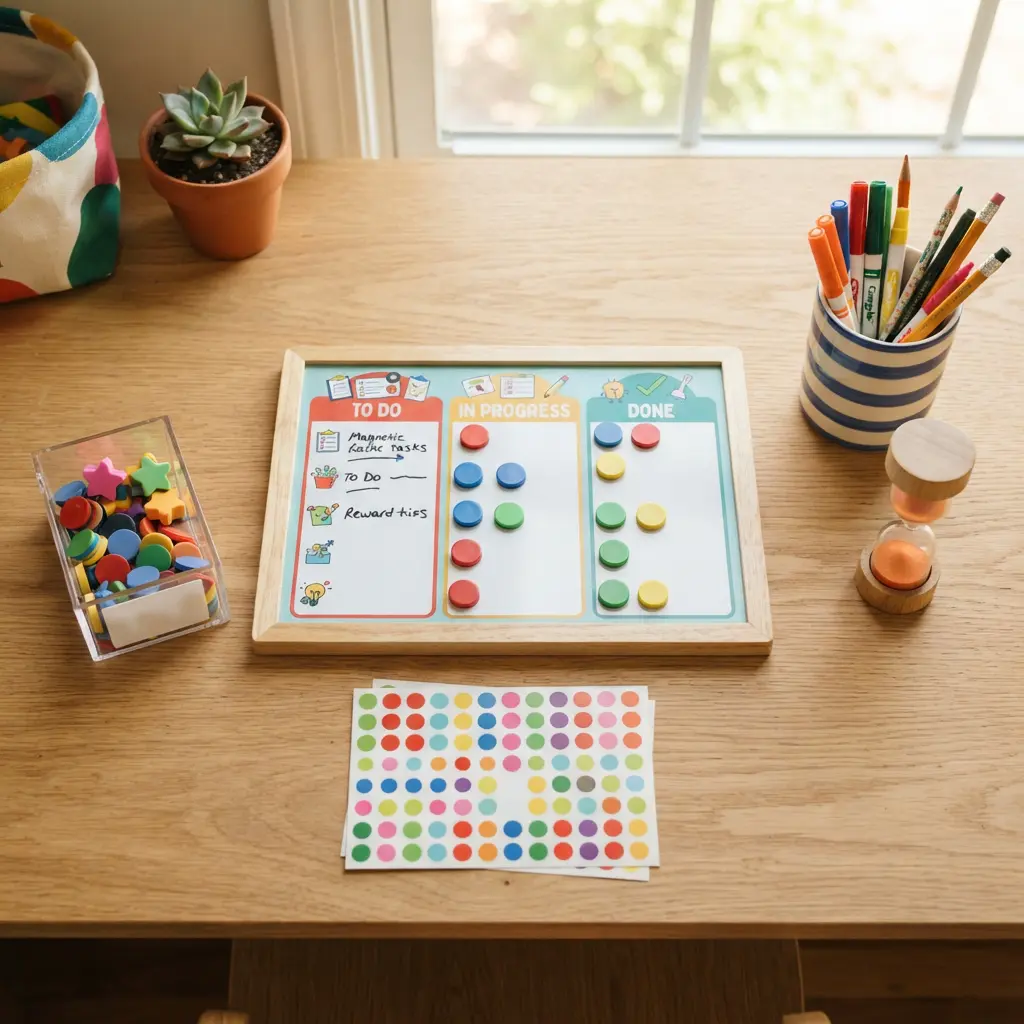
- Pick one system from this list that matches your child's personality — a collector, a visual kid, or one who loves a game feel.
- Set up the physical materials tonight: print the chart, gather the tokens, or draw the fill-bar on a piece of paper.
- Choose two chores to start with using your Daily Chore Chart or Weekly Chore Planner — not the whole list, just two.
- Decide the reward together with your child before you begin, so the goal is clear from the start.
- Celebrate the first completion loudly and immediately, whatever system you chose, so the connection between effort and reward is crystal clear from day one.
Frequently Asked Questions
How many chores should my ADHD child have on their chart to start? Starting with two to three chores is usually more effective than a full list. When kids with ADHD feel overwhelmed at the start, they're more likely to shut down entirely. Building a short win streak first creates the momentum to add more tasks over time.
What kinds of rewards work best for ADHD kids? Rewards that feel immediate and personally meaningful tend to work best. Many families find a mix of small daily rewards and a slightly bigger weekly reward keeps motivation steady. Letting your child help choose from a menu of options often increases their buy-in compared to rewards they had no say in.
What do I do if my child loses interest in the reward system after a week or two? This is very common and doesn't mean the system failed. Rotating rewards regularly — swapping out options on the reward menu every week or two — can help keep things fresh. You can also change the visual format of the chart itself. The novelty of a new system is part of what makes it engaging for ADHD brains.
Ready to try this with your family?
Start with a solid foundation — download our 7 Free Printable ADHD Daily Routine Sheets and pair them with the reward system that felt like the best fit today. Grab your free download here. If you're ready for the full system, The ADHD Parent Toolkit at klivanta.com has everything you need in one place — charts, planners, checklists, and step-by-step guidance built for families just like yours.


Leave a Comment